



Buying a Dental Handpiece (Turbine): A Complete Guide
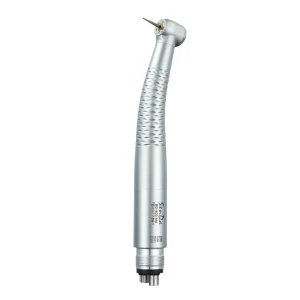
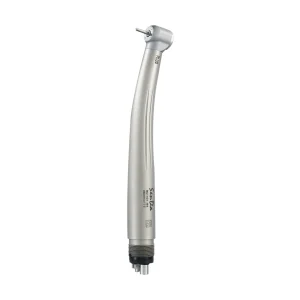

What to Consider When Buying a Dental Turbine?
The dental turbine is the heart of cutting and preparation procedures. Choosing the right one not only affects treatment quality but also impacts long-term maintenance costs and downtime. The first factor is compatibility with your dental unit: carefully check whether it is a two-hole or four-hole connection, and whether fiber-optic compatibility is required, to avoid using adapters. Second, look for stable power and speed with minimal vibration and noise; a strong motor without vibration control compromises both patient and dentist experience. Third, pay attention to bearings (ceramic or steel) and the cartridge quality; these play the biggest role in durability, smooth rotation, and noise levels. Fourth, ensure an effective cooling system and preferably an anti-retraction valve to prevent backflow contamination. Fifth, consider ergonomics: light weight, comfortable grip, and good balance for long procedures. Sixth, make sure the turbine is autoclavable at 121/134°C cycles and that spare parts and service support are available. Finally, focus on reliable warranty, product authenticity, and long-term ownership costs; buying cheap but paying more for frequent repairs is not economical.
What Is a Dental Turbine and What Does It Do?
A dental turbine is the main high-speed tool used in restorative dentistry. It rotates at very high speeds to cut enamel and restorative materials and shape the desired cavity. Its popularity comes from time efficiency, high precision, and better visibility with the help of water/air spray. In daily practice—removing caries, shaping cavities, or removing old restorations—the turbine delivers fast, clean, and predictable results. However, the wrong choice may cause excessive heat, disturbing noise, or frequent cartridge failure. This is why understanding its structure, components, and model differences is essential. If you have been using an older model, trying newer turbines with ceramic bearings, multi-point spray cooling, and improved vibration dampening will surprise you with smoother cutting, lower noise, and better patient comfort.
Main Components of a Dental Turbine
A turbine consists of several key parts, each directly affecting performance and durability:
- Head (housing for cartridge and bearings)
- Cartridge/Rotor (the heart of rotation and speed delivery)
- Bearings (ceramic or steel; impact smoothness, noise, and lifespan)
- Chuck system (Push-Button or key-type for securing burs)
- Water/Air channels (for cooling and debris removal)
- Body/Grip (ergonomics and balance)
- Coupling/Connection (2-hole, 4-hole, or fiber-optic compatibility)
Ceramic bearings are lighter, more durable, and quieter, while steel bearings are more affordable. Push-Button chucks allow faster bur changes but require a reliable spring system to avoid bur wobble. Titanium bodies reduce weight and enhance hand comfort. Finally, spray design (single or multi-point) determines cooling efficiency and visibility.
Table: Components and Key Notes
| Component | Application / Key Note |
|---|---|
| Head | Houses cartridge and bearings; angle/size affects access and visibility |
| Cartridge/Rotor | Creates high speed; balance and blade quality reduce vibration/noise |
| Bearings | Ceramic = quieter, longer lifespan; Steel = cost-effective |
| Chuck | Secure bur lock; fast, safe replacement |
| Water/Air channels | Cooling and field cleaning; multi-point preferred |
| Body/Grip | Ergonomics, anti-slip, balance for long use |
| Connection | 2-hole, 4-hole, or fiber-optic; defines unit compatibility |
Types of Dental Turbines
Turbines are commonly categorized by:
- Speed/Usage: High-Speed for cutting enamel and restorative work; Low-Speed for polishing/finishing.
- Optics: With LED (optical/fiber-optic) or without light.
- Connection type: 2-hole, 4-hole, or fiber-optic.
If most of your work involves heavy cutting, choose High-Speed with a balanced cartridge and multi-point spray. For deeper or darker fields, opt for fiber-optic/LED for superior visibility. Always match the coupling to your unit to avoid adapters. Some brands offer proprietary couplings—these improve stability and light transfer but increase cost and reduce interchangeability. For a budget-friendly choice, high-quality non-optic turbines with a small head and strong spray are practical.
Table: Types Comparison
| Type | Speed/Usage | Advantages | Disadvantages | Best For |
|---|---|---|---|---|
| High-Speed, no light | Fast cutting/general | Cheaper, easier maintenance | Poorer visibility in deep areas | Daily restorative work |
| High-Speed optic/fiber-optic | Fast cutting/deep cavities | Excellent visibility, higher precision | More expensive, added parts | Aesthetic/precise treatments |
| Low-Speed | Polishing/finishing/special endo | Greater control, less heat | Lower speed/power | Polishing, fine finishing |
How Does a Dental Turbine Work?
The classic high-speed turbine works with compressed air: airflow hits rotor blades, spinning it at very high speeds, transferring motion to the bur. At the same time, water/air spray cools and cleans the field to prevent pulp damage and maintain visibility. Rotor balance and bearing quality determine vibration and noise levels. The exhaust design must prevent particle scattering and backflow, making an anti-retraction system essential. In optic models, LED or fiber light channels are also integrated. What makes a difference in practice is the combination of a precise rotor, quality bearings, effective spray, and a body that dampens vibration—resulting in smooth, cool, fast, and clean cutting.
Advantages and Disadvantages of Turbines
The biggest advantage is speed and time efficiency. With multi-point spray and compact heads, they also offer better access and visibility in tight spaces. Smooth cutting and high precision are possible with well-balanced rotors. On the downside, turbines require more careful maintenance compared to electric handpieces: regular lubrication, quality cartridges, and proper autoclaving are essential. Low-quality bearings or cartridges lead to vibration, noise, and early breakdowns—raising maintenance costs.
Table: Pros and Cons
| Advantages | Disadvantages |
|---|---|
| High speed and efficiency | Requires regular lubrication and servicing |
| Better visibility with spray | Sensitive to cartridge/bearing quality |
| Ergonomic, great access | Higher noise in low-quality models |
The Turbine Head (Handpiece Head)
The head largely determines visibility, access, and precision. Mini heads are ideal for pediatric or limited access areas, offering better vision and easier maneuverability. Larger heads, however, provide stronger cooling capacity and spray. Neck angle and water/air outlet design—especially multi-point—are crucial for efficient cooling and minimal debris scatter. Push-Button chucks allow fast and safe bur changes, provided spring and lock quality are high. For cosmetic and fine work, mini optic heads are excellent. For long and heavy cutting, larger heads with ceramic bearings and stronger cooling are smarter choices.
Dental Turbine Buying Checklist
Before purchasing, review this checklist: unit compatibility, weight and ergonomics, speed and torque stability, vibration and noise, cartridge/bearing quality, multi-point spray and anti-retraction, autoclavability, availability of spare parts/service, warranty and authenticity, and overall cost of ownership. If undecided, test the turbine briefly on your own unit—hands-on experience settles most doubts.
Table: Buying Checklist
| Factor | What to Check |
|---|---|
| Connection compatibility | 2-hole, 4-hole, or fiber-optic; matches unit |
| Ergonomics & weight | Balance, anti-slip grip, low fatigue |
| Power & speed | Stable under load, smooth start, no drop-off |
| Noise & vibration | Low noise, well-balanced rotor |
| Bearings & cartridge | Quality ceramic/steel; easy access to spares |
| Cooling & anti-retraction | Multi-point spray; Anti-Retraction system |
| Autoclavability | Handles 121/134°C cycles reliably |
| Warranty & authenticity | Official distributor, verifiable serial number |
| Cost of ownership | Service, cartridge cost, downtime |
Price of Dental Turbines
Price is more than just the tag; it reflects cartridge/bearing quality, head and coupling type, optic features, spray design, and after-sales service. Generally, there are three tiers: Economy (good for beginners or secondary units), Mid-range (balanced price/quality for busy clinics), and Professional (highest precision, lowest noise, longest lifespan). Always evaluate total cost of ownership—a cheap turbine with frequent breakdowns may cost more in the long run. A useful tip: ask the seller to include an original spare cartridge and clear warranty conditions on the invoice.
Table: Price Ranges
| Category | Key Features | Recommended Use |
|---|---|---|
| Economy | Steel bearings, no light | Entry-level, second unit |
| Mid-range | Enhanced/ceramic bearings, multi-point spray | Busy clinics, versatile restorative work |
| Professional | Optic/fiber-optic, mini head, very low noise | Cosmetic/fine, long sessions |
Best Way to Buy a Dental Turbine
Before purchase, test it on your own unit to assess weight, balance, real sound, and spray stability. Verify authenticity with serial number and official hologram, and ensure warranty/service conditions are clearly written on the invoice. In busy clinics, keep an original spare cartridge handy to minimize downtime. Ask about return conditions and consumables. If undecided between models, decide based on your work: cosmetic/fine → mini optic head; extensive cutting → strong spray, durable head, ceramic bearings. Ultimately, choose a seller that provides genuine after-sales support—buying a turbine is not just a transaction, it’s the beginning of technical partnership.
FAQs
How long does a turbine last? Depending on cartridge/bearing quality, lubrication, and sterilization, from several months to several years.
Are spare parts easy to find? For leading brands, yes—always confirm cartridge and O-ring availability before buying.
Is it compatible with my unit? Match the connection (2-hole, 4-hole, fiber-optic); use adapters only if necessary.
How to tell original from fake? Check serial number, packaging, official hologram, and invoice.
What’s the risk of cheap turbines? More vibration/noise, early cartridge failure, higher maintenance cost.
What about routine service? Follow manufacturer lubrication instructions, use clean/dry air filters, and standard autoclave cycles.
Conclusion
In short: prioritize connection compatibility and ergonomics, then power and stable speed with low noise/vibration, followed by cartridge/bearing quality and multi-point spray with anti-retraction. Make sure it’s autoclavable and supported with spare parts and warranty. Focus on long-term cost of ownership, not just the purchase price. Testing it on your own unit can remove most doubts. Finally, choose a turbine that matches your practice style and reduces hand fatigue—this is the choice that improves treatment quality and ensures peace of mind for years to come.
 الماسه
